
How Expats Handle Healthcare in the Dominican Republic: Costs, Insurance, and Care

Healthcare in the Dominican Republic can be affordable and surprisingly good, but only if you know where to go and how to pay for it. Most expats do not treat the system like they would in the United States, Canada, or Europe. They build a practical setup: private clinics for routine care, local insurance for predictable costs, cash for smaller visits, and evacuation coverage for the rare case that turns serious.
The country has capable doctors, modern private hospitals, and many specialists trained abroad. It also has uneven care outside major cities, long waits in public hospitals, and a big gap between tourist-zone convenience and rural reality.
This guide is informational only. It is not medical, insurance, or legal advice. Always confirm current prices, coverage rules, and provider networks before choosing care or buying a plan.

Most expats use private healthcare, not public hospitals
The Dominican Republic has both public and private healthcare. Public hospitals serve a large part of the local population and can provide essential care, but most expats avoid them unless they have no other option.
The reasons are practical:
Long waits
Crowded facilities
Limited English spoken
Variable access to supplies
Less predictable service
More paperwork and uncertainty
Public hospitals can be lifesaving, especially in emergencies, but they are not the first choice for most foreign residents who can afford private care.
Private healthcare is a different experience. In Santo Domingo, Santiago, Punta Cana, and other larger areas, private hospitals and clinics often have modern equipment, organized appointment systems, and specialists across major fields.
Well-known private medical networks and hospitals include:
CEDIMAT in Santo Domingo
Plaza de la Salud in Santo Domingo
Hospiten in Santo Domingo and Punta Cana
Private clinics in Santiago, La Romana, Puerto Plata, and other expat-heavy areas
These facilities are where many expats go for cardiology, imaging, surgery, maternity care, labs, and emergency treatment. They are not free, but compared with U.S. private healthcare, many services feel affordable.
The main issue is access by location. Santo Domingo has the deepest medical infrastructure. Punta Cana has good private care, partly because of tourism. Santiago has strong options as well. Smaller towns may have clinics for basic needs, but serious care often means traveling to a larger city.
A common expat strategy looks like this:
Use a local private clinic for routine appointments.
Keep a trusted general doctor nearby.
Know which hospital to use in an emergency.
Carry local insurance or pay cash for minor care.
Keep international or evacuation coverage for major events.
That mix is more realistic than expecting one insurance card to solve every situation.
Local ARS insurance can lower routine costs
Local private insurance in the Dominican Republic is usually referred to as ARS, short for Administradora de Riesgos de Salud. These are health risk administrators that manage health plans and provider networks.
Common names expats encounter include:
ARS Humano
ARS Universal
Mapfre Salud
Other local or employer-linked ARS plans
Local ARS coverage can be useful if the goal is to reduce costs for everyday care inside the Dominican Republic. Plans often work through a network of approved doctors, clinics, labs, pharmacies, and hospitals.
In simple terms, this is how local private insurance usually works:
Feature | What to expect |
Monthly premium | Often around $40 to $120 per month, depending on age, plan, and coverage |
Provider network | You usually need to use approved clinics, doctors, labs, or hospitals |
Copays | Many visits and services still require a small payment |
Exclusions | Pre-existing conditions, waiting periods, and coverage caps may apply |
Hospital coverage | Often partial, with limits based on the plan |
Medication | Some prescription coverage may apply, but not everything is included |
For routine doctor visits, lab work, imaging, and specialist appointments, an ARS plan can make daily healthcare more predictable. It can also help avoid paying the full private rate every time.
That said, local ARS plans are not the same as high-end international health insurance. They may have annual limits, exclusions, narrow networks, and benefit caps that surprise newcomers. A plan that works well for checkups may not be enough for cancer treatment, complex surgery, or medical care outside the Dominican Republic.
Read the plan documents carefully. Ask direct questions before signing:
Which hospitals can I use in Santo Domingo, Santiago, and Punta Cana?
Does the plan cover emergency hospitalization?
Are pre-existing conditions excluded?
Is there a waiting period for surgery or maternity care?
What are the annual limits?
Can I use the plan outside the Dominican Republic?
Is coverage available with a passport, or do I need residency and a Dominican cédula?
The answer can vary by insurer, broker, age, and plan type. If the salesperson gives vague answers, keep asking until the coverage is clear in writing.

Many expats still pay cash for routine care
Paying out of pocket is normal in the Dominican Republic, especially for smaller medical needs. Even expats with insurance often pay cash for routine visits when the price is low, the doctor is outside the network, or the appointment is easier without processing a claim.
A standard doctor consultation often costs about $30 to $60 out of pocket, depending on the city, clinic, and doctor. Specialists may cost more, but many visits are still manageable compared with private care in the United States.
Typical out-of-pocket situations include:
General doctor visits
Dermatology appointments
Gynecology visits
Pediatric checkups
Dental cleanings or fillings
Basic lab tests
Prescription refills
Minor urgent care needs
Specialist visits can involve copays if using ARS insurance, or full cash payment if outside the network. In many cases, paying cash gives more choice and faster access.
Prescription medication is another reason expats find the system manageable. Many common medications are affordable, and pharmacies are widespread in cities and towns. Some medications that require a visit or prescription in one country may be easier to obtain locally, while others may not be available under the same brand name.
Use common sense with medication:
Bring copies of prescriptions from your home country.
Learn the generic name, not just the brand.
Ask a doctor before switching equivalents.
Use reputable pharmacies.
Keep extra supply if living outside a major city.
Confirm storage needs during hot weather.
Self-insuring is common among expats who have savings and few ongoing medical needs. They skip local insurance for routine care, pay cash for visits and prescriptions, and keep a larger emergency policy for major events.
This can work, but it is not risk-free. A simple clinic visit may be cheap. A hospitalization, surgery, cardiac event, stroke, or serious accident can change the math fast.
A more balanced approach is often better:
Pay cash for routine visits.
Use local ARS for network care if it fits your life.
Keep emergency savings in an accessible account.
Carry medical evacuation or international coverage for worst-case events.
The right mix depends on age, health, location, budget, and risk tolerance.
Emergency care is location-dependent
Emergency care in the Dominican Republic depends heavily on where you are.
The national 911 system operates in many major areas and has improved emergency response in cities and busy zones. In Santo Domingo, Santiago, Punta Cana, and other developed areas, ambulance access is more realistic than it once was.
Rural towns are another story. Response times can be slower. Ambulance availability may be limited. Smaller facilities may not have specialists, advanced imaging, ICU beds, or the right equipment for complex emergencies.
That is why expats should not wait until a crisis to choose an emergency plan.
At minimum, know:
The nearest private hospital with 24-hour emergency care
The best hospital within driving distance
Local ambulance numbers, if available
Whether 911 works reliably where you live
Which hospital your insurance network prefers
Who to call if you are alone or do not speak Spanish well
How to get to Santo Domingo or Santiago for higher-level care
For major medical events, location can matter as much as insurance. A private clinic on the coast may stabilize a patient, but serious trauma, neurological cases, advanced cardiac care, or complex surgery may require transfer to a larger hospital.
This is where medical evacuation coverage becomes smart. Medevac coverage can help arrange and pay for transport to another facility, another country, or back home when local care is not enough.
It is especially worth considering for:
Older retirees
People with heart conditions
People with complex medical histories
Families with young children
Divers, motorbike riders, and adventure travelers
Anyone living outside Santo Domingo or Santiago
Anyone who wants the option to return to the U.S., Canada, or Europe for critical care
A medevac policy is not the same as normal health insurance. It does not pay for every doctor visit. Its value is in the rare, expensive situation where you need serious transport and coordination.
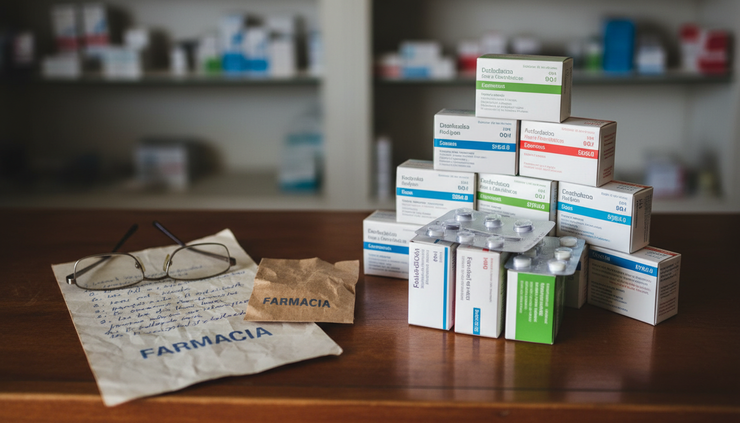
Build a healthcare setup before you need it
The easiest time to plan healthcare is when nothing is wrong. Once there is fever, chest pain, a car accident, or a child with an asthma attack, everything becomes harder.
A practical expat healthcare setup in the Dominican Republic should include four parts.
Choose a primary doctor
Find a general doctor or internist near where you live. Ask other residents for names, but still test the fit yourself. A good doctor should explain treatment clearly, answer questions, and refer you when needed.
Keep their contact details saved in your phone.
Pick your hospital in advance
Do not assume the nearest facility is the best one. If you live in a smaller town, identify both the nearest emergency option and the best higher-level hospital within reach.
For example, someone in Punta Cana might use a local private facility for many issues but still want a plan for serious care. Someone near the north coast may need to think about Santiago. Someone in a rural area may need a transport plan to the capital.
Decide how you will pay
There is no single best answer. Many expats use one of these models:
Approach | Best fit | Main risk |
Local ARS plan | Routine care inside the DR | Coverage caps and network limits |
Pay cash only | Healthy people with savings | Large bills after major illness or injury |
International insurance | People who want broader coverage | Higher premiums |
ARS plus medevac | Long-term residents who want local affordability and emergency backup | Still requires careful reading of exclusions |
If choosing ARS, compare more than the monthly premium. The cheaper plan may have lower limits or a weaker network. If choosing cash-only, keep enough money available for urgent care, not locked in a long-term account.
Prepare your medical documents
Keep a simple medical file in both printed and digital form. Include:
Passport copy
Insurance card or policy number
Emergency contacts
Blood type, if known
Medication list
Allergies
Surgeries and major diagnoses
Copies of key prescriptions
Doctor contact information from your home country
If Spanish is not strong, translate the most important parts. In an emergency, clear information matters.

Bilingual care is common in some places, but not guaranteed
In Santo Domingo, Punta Cana, and upscale private clinics, many doctors speak some English. Some are fluent, especially those who trained abroad or work often with foreigners.
Hospital staff are more mixed. A specialist may speak English well, while reception, billing, nurses, technicians, and pharmacy staff may speak mostly Spanish.
This matters because healthcare involves details. Symptoms, allergies, dosages, prior diagnoses, and insurance rules are easy to misunderstand.
If Spanish is limited, take practical steps:
Learn basic medical phrases.
Write symptoms down before the visit.
Bring a Spanish-speaking friend for serious appointments.
Use translation apps for simple communication.
Ask doctors to write instructions clearly.
Confirm medication dosage before leaving.
Do not let pride get in the way. Clear communication is part of safe healthcare.
FAQ
Can foreigners buy local health insurance in the DR without residency?
Sometimes, but not always. Some local insurance options may accept foreigners using a passport, especially through certain brokers or private plans. Many ARS plans are easier to access with legal residency and a Dominican cédula. Requirements can change by insurer, age, and plan type, so ask for the rule in writing before you apply.
How much does a doctor visit cost out of pocket in the DR?
A routine doctor consultation often costs about $30 to $60 out of pocket. Specialists, private hospitals, and tourist-zone clinics may charge more. Lab work, imaging, procedures, and medications are billed separately unless covered by an insurance plan.
Are Dominican doctors and hospital staff bilingual?
Some are, especially doctors in private hospitals in Santo Domingo, Punta Cana, Santiago, and areas with many foreigners. Bilingual staff are not guaranteed. Reception, nurses, billing teams, and pharmacy staff may speak mostly Spanish, so it helps to bring translated medical notes or a Spanish-speaking helper for serious care.
The practical takeaway
Healthcare in the Dominican Republic works best when expats treat it as a planned system, not a gamble. Public hospitals exist, but most foreign residents use private clinics and hospitals for comfort, speed, and predictability. Local ARS insurance can help with routine costs, but it has limits. Paying cash is common and often affordable for smaller needs. Emergency evacuation coverage is the layer many people forget until they need it.
The smart approach is simple: choose your doctors, know your hospitals, understand your insurance, keep cash accessible, and have a plan for serious emergencies. That preparation makes healthcare in the DR far less stressful when something actually happens.


Comments